


Summer may be winding down, but there’s still energy in the air. From real-world lessons delivered by this year’s engineering interns to a global spotlight on teaching AI, this issue of Drive Forward News is all about practical takeaways and fresh thinking. With the school year approaching, it’s the perfect time to pause, refocus, and get ready with the tools and updates built to make your work easier and your students’ experience even stronger.
Jump to a section to read:
- What Engineering Interns Taught Us (That We Didn’t Expect)
- Teaching the “Why” Behind AI, Not Just the “How”
- New Tools, Old Tricks, and the Calm Before the School Year
What Engineering Interns Taught Us (That We Didn’t Expect)
At VEX Robotics, interns aren’t hidden away behind a desk; they’re right in the thick of it, working alongside our engineers and wrestling with real-world challenges. But the biggest thing they brought this summer wasn’t a tool or a technique. It was a shift in how we think.
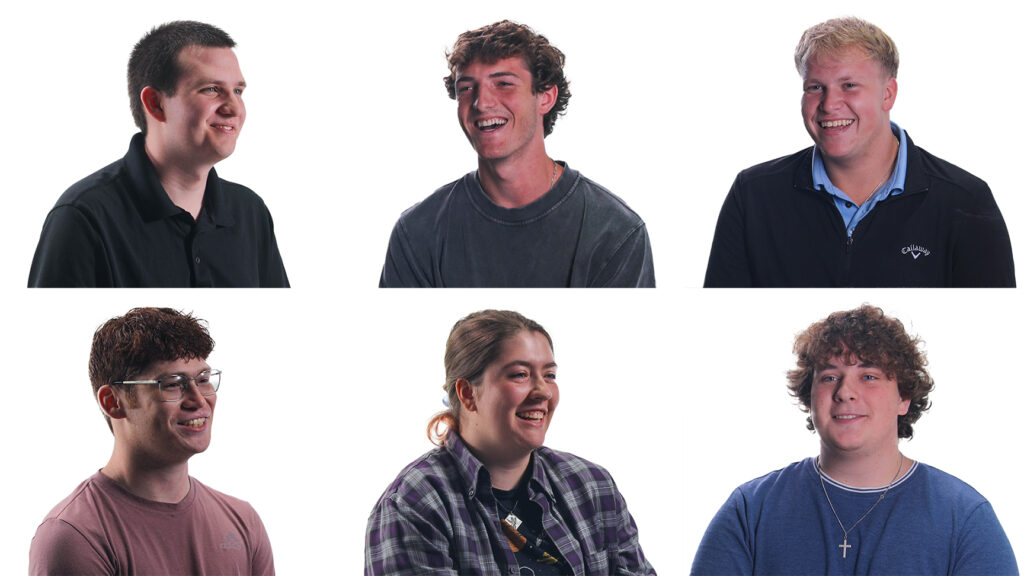
By taking the time to hear how our interns approached problems, asked questions, and worked through unknowns, we started asking ourselves some new questions, too:
- Are we listening closely enough to new voices?
- When’s the last time we paused before jumping in to lead?
- What could we see differently if we borrowed their lens for a day?
Here’s what stood out:
1. Curious questions spark big shifts
Sometimes, all it takes is someone asking “Why?” for the first time to shake things up. Our interns did that, again and again, not by challenging us, but by being genuinely curious. Their questions prompted us to take a second look at systems we had previously considered solid. That kind of fresh perspective is something we want to hold onto.
“I got disqualified from a science fair because I built a hoverboard. That was my first taste of real engineering.”
Aidan, Mechanical Engineering

2. Feedback goes both ways
Explaining things to interns didn’t just help them; it helped us. When they asked for context, we had to clarify our own thinking. That back-and-forth made our teams better communicators and better thinkers. Good questions, it turns out, don’t just test understanding—they sharpen it. This applies to robotics and your career goals.

“I changed majors when I realized I think better in 2D. VEX Robotics gave me the support to figure that out.”
Lily, Electrical Engineering
3. Being a work-in-progress is a strength
Interns reminded us what it looks like to learn out loud—to admit what you don’t know, to ask for help, and to keep going anyway. That kind of openness is easy to lose in the rush of deadlines. But watching it in action reminded us: learning in public is not just acceptable, it’s powerful and encouraged.
“When a tough problem finally clicks after weeks of troubleshooting, that’s the best moment.”
Brandon, Electrical Engineering

The most valuable things we took from this summer didn’t show up in the project tracker. They came through small moments, the honest conversations, thoughtful questions, and a refreshing sense of curiosity.
The future of engineering is in great hands. And thanks to our interns, it’s not just shaping us today, but also inspiring our growth for tomorrow.
Share this on social media:
Teaching the “Why” Behind AI, Not Just the “How”

Here’s the scenario: During a middle school Computer Science (CS) class at the end of the last school year, a student asked their teacher if the robot they were building could “think like ChatGPT.” The teacher paused. Excited by the curiosity but uncertain about how to answer. It’s a moment many educators around the world are starting to encounter. As AI transforms education, one thing remains clear: a solid foundation in computer science is more important than ever.
In a recent virtual presentation to educators in Shanghai, Jason McKenna and Dr. Jimmy Lin from VEX Robotics shared how schools can better prepare students for an AI-driven future. Not by replacing traditional instruction, but by enhancing it with thoughtful tools and intentional design.
A Global Moment for Innovation
Both in the U.S. and China, there’s no universal AI curriculum yet. This gap opens the door for innovation. “There’s a vacuum,” McKenna said. “And it can be filled by forward-thinking districts, educators, and organizations.”
Some places, like Miami-Dade County Public Schools, are already taking the lead. Others are just beginning to explore what AI might look like in a K–12 setting. That’s why global conversations like these are so valuable. They don’t just cover what to teach, but how to create meaningful, age-appropriate AI learning experiences rooted in strong CS principles.
Why CS Still Matters, Even in the Age of AI
A key takeaway from the session is that AI isn’t replacing computer science. It’s making it more vital than ever. “Even with tools like ChatGPT, students still need computational thinking to ask the right questions and evaluate the results,” Dr. Lin explained. “They still need to debug and problem-solve.”
That’s where the VEX Robotics Continuum comes in. It ranges from screen-free, hands-on coding with VEX 123 to more advanced AI tools like VEX AIM. Every product is built to make computer science relevant, practical, and accessible. The goal is to help students build true fluency, not just exposure.
Whether your school is just beginning to explore AI or looking for simple ways to integrate it without overwhelming staff or students, this approach offers a developmentally appropriate and scalable starting point.
Designing for Every Learner
At VEX Robotics, inclusivity is a top priority. “From our collaboration with Broward County to how we built VEX 123, we’ve seen how offering different modes of learning can make a big difference,” McKenna shared. “Whether it’s touch coding, hands-on materials, or screen-free learning, it’s about meeting students where they are.”
Insights like these can guide new developments, such as VEX AIM, which provides various interaction methods and an integrated controller to accommodate different learning needs. As VEX Robotics continues to enhance accessibility through software innovations like the keyboard navigation in VEXcode 4.0, high-contrast themes, and tools that support adaptive learning, the emphasis is on creating environments where every learner can thrive.
Responsible AI Starts with Design
One common concern from educators worldwide is how to bring AI into the classroom without risking student privacy.
VEX Robotics takes that concern seriously. For example, the VEX AI Vision Sensor processes data entirely on-device. There is no cloud use or personal data collection. “Teachers should feel confident bringing AI into the classroom,” McKenna said. “That confidence starts with protecting privacy.”
Adapting for Local Impact
As implementation came up, Dr. Lin stressed the importance of cultural relevance. “Teachers understand their students better than anyone. When we adapt STEM Labs and resources to reflect local contexts, students are more engaged and outcomes improve.”
Whether in Shanghai or Chicago, the goal isn’t a one-size-fits-all solution. It’s about giving educators the tools and flexibility to make these resources their own. In doing so, VEX Robotics isn’t just spreading technology. It is fostering sustainable, locally driven change.
The Path Ahead
At a time when AI can feel both exciting and uncertain, VEX Robotics is helping educators find clarity, build trust, and stay focused on what matters. It all starts with strengthening computer science foundations, designing for diverse learners, and keeping educators and students at the heart of the process.
Whether you’re a classroom teacher, coach, or district leader, these ideas offer a path forward. Explore the VEX Continuum to see what fits your school best, and subscribe to Drive Forward News for practical updates, ideas, and stories from classrooms around the world.
About the Contributors
Jason McKenna
Vice President of Global Educational Strategy at VEX Robotics, Jason is a former teacher with over 20 years of experience helping schools integrate CS and robotics. He’s also the author of What STEM Can Do for Your Classroom and a passionate advocate for hands-on, equitable learning.
Dr. Jimmy Lin
Director of Computer Science Education at VEX Robotics, Dr. Lin brings deep expertise in international K–12 systems. A Shanghai native, he supports partners worldwide in tailoring the VEX Continuum to local needs, with a focus on accessibility, AI literacy, and inclusive STEM education.
Share this on social media:
New Tools, Old Tricks, and the Calm Before the School Year
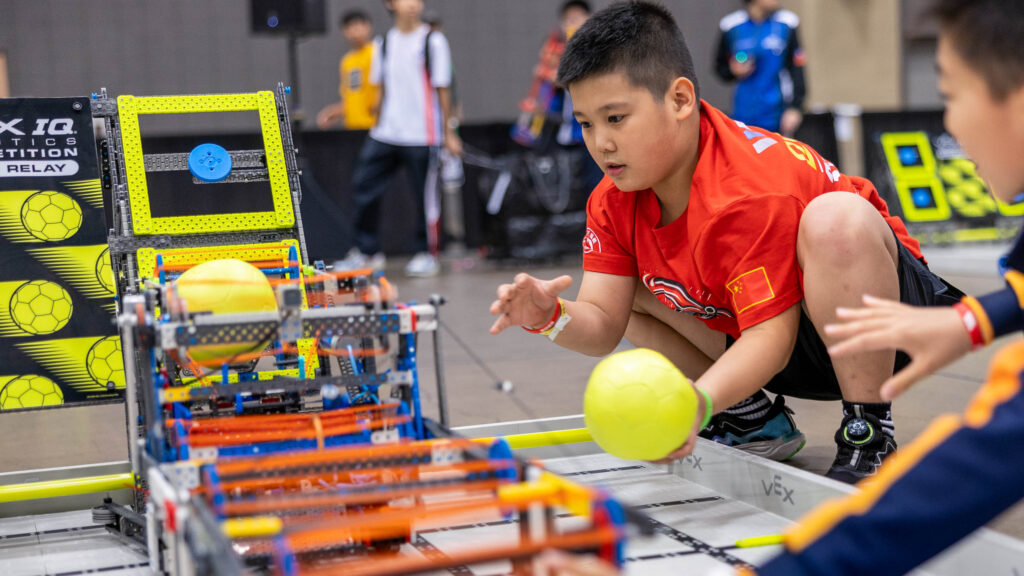
In education, August can be a paradox. The calm before the storm. A last breath of quiet before classrooms fill again. It’s a time when small insights can make a big impact on the year ahead.
This month, we’re highlighting two updates from VEX PD+ Insights that land on opposite ends of the spectrum. Still, both serve the same purpose: helping you enter the new year with clarity, creativity, and confidence.
Reuse What You Already Have
If you coach a team or manage storage closets, you probably have old game elements from V5RC or VIQRC seasons stacked somewhere. This PD+ post is a practical invitation to do something with them.
Educators are reimagining these pieces as:
- Training kits for new students or feeder teams
- Creative props in PE, theater, or art class
- Cross-grade challenges to build community and engagement
It’s not just about storage or sustainability, it’s about starting the year with a spirit of ingenuity and inclusion.
🗞️ Read here
Preview What’s Coming in VEXcode
Meanwhile, the newest version of VEXcode is quietly rolling out in Beta, offering improvements to accessibility and student experience.
What’s coming:
- A restructured Blocks toolbox to help learners find what they need faster
- Color-coded categories and consistent layout across platforms
- Full screen reader support and improved keyboard navigation for Python—making VEXcode one of the first web-based platforms to meet WCAG 2.1 AA for text coding
These updates are an important part of reflecting a commitment to inclusivity, discoverability, and student ownership.
🗞️ Read here
This Is the Moment
You don’t need to overhaul your plans. Just pause, catch up, and carry forward what helps. A small tweak, new features, fresh ideas, and thoughtful reuse can shift how the year begins.
This is your moment to think ahead while things are still quiet. We’ll be here to help every step of the way.
Share this on social media:

We’re grateful to be part of your busy season.
As classrooms gear up and calendars fill fast, we’ll keep doing our part to share tools, updates, and ideas that are helpful. From new product details to small moments of inspiration (and the quiet return of Quey), we hope Drive Forward News earns a spot in your routine—right when you need it.
Here’s what we covered in the last edition of Drive Forward News:
- Looking Back at 2025 So Far: What You Might Have Missed
- My Robotics Journey: Real Stories About Educators Starting Robotics
- Learn. Lead. Share: The 2025 VEX Robotics Educators Conference
- VEX Robotics World Championship 2025: Relive the Magic
- Quick Reads Worth Your Time
- Reading Between the Lines of Learning