


You’re busy. This issue trims the noise and gets to what helps—concise updates, classroom‑ready links, and three short My Robotics Journey videos from educators Patricia Cortez, Zach Short, and Eric Howe. They’re quick, honest, and useful for anyone building or growing a robotics program.
New here? The series is built for first‑timers.
Jump to a section to read:
- Low-Friction Learning: How Small Routines Unlock Big Thinking
- From Planning to Playoffs: Updates to Support Teachers & Coaches at Every Stage
- Funding Your Robotics Program: A District Leader’s Guide to CTE and Title IV Grants
- My Robotics Journey
Low-Friction Learning: How Small Routines Unlock Big Thinking
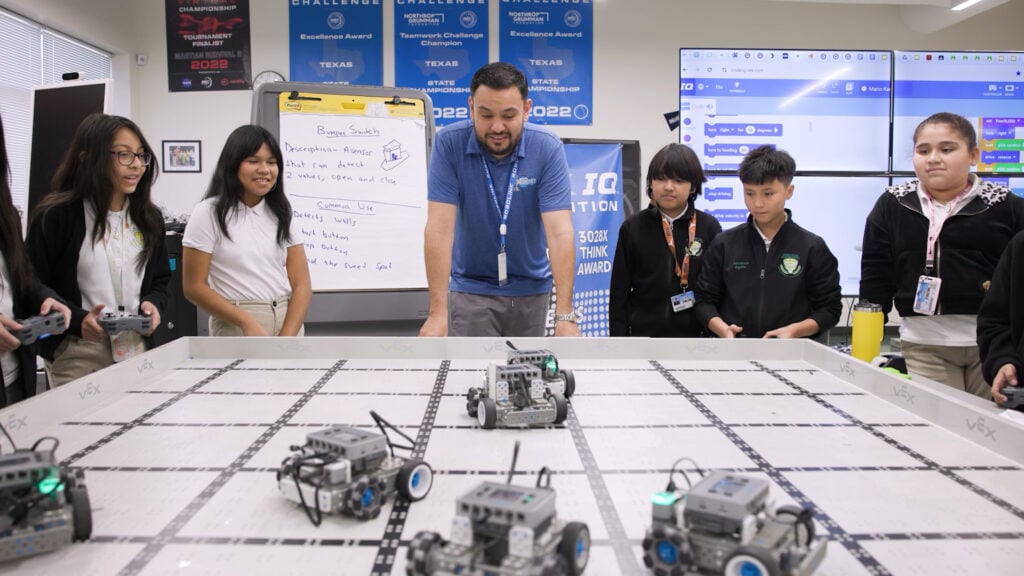
In classrooms where STEM thrives, one constant often gets overlooked: the first ten minutes.
Too often, these early minutes slip into a familiar fog. Materials are missing, directions unclear, students waiting. But when routines are intentional, those same ten minutes become launchpads for deeper, hands-on learning. Across thousands of classrooms, we’ve seen this pattern: the more seamless the start, the more time students spend building, thinking, and solving. We call it low-friction learning, and it begins before the first question is even asked.
Make the First Ten Minutes Count
The difference between a rocky lesson and a high-momentum one often comes down to how students begin.
When openers are consistent, with roles posted, materials ready, and tools charged, class doesn’t stall. Students know what to do the second they walk in. It’s not about moving faster. It’s about readiness over rush. A quick five-minute tune-up—inventory check, batteries awake, spare parts handy—prevents the interruptions that derail learning later. Less waiting, more making.
Accessible by Design
Strong routines don’t just support efficiency. They promote equity.
Predictable organization, clear visuals, and posted steps help every student access the work quickly and independently. That’s not just classroom management. It’s accessibility in action. These aren’t accommodations. They’re good teaching moves that support all learners.
Thinking, Visible Early
A low-friction start doesn’t just save time. It shifts the tone. The best routines create space for curiosity right away.
Whether it’s a “How does a robot see?” demo or a “Can you build a Drivetrain?” challenge, early tasks that feel tangible help students see STEM as something they do, not just watch.
And when thinking becomes visible through sketching, talking, or testing, students build habits of reflection from day one.
What This Means for AI in STEM
As conversations about AI grow louder, classrooms can stay grounded by starting small. Many of the same routines that support hands-on robotics—clear sensing tasks, data visibility, human-led reflection—are the perfect entry point for age-appropriate, safe, and meaningful AI learning.
Whether students are observing how a robot detects light or comparing how humans and machines perceive, they are developing the core habits of AI literacy: asking questions, noticing patterns, and thinking critically about automation.
Explore More: Extend the Learning
This approach connects directly with some additional articles from VEX PD+ Insights:
- Back to School Tune Up: Preparing Your Kits
- Supporting Novice Builders
- Cultivating the Seeds of Creativity in the Learning Environment
- Where do I Get Started? Let the Teach Pages be Your Guide
Each article offers practical tools to bring low-friction learning to life.
Share this on social media:
From Planning to Playoffs: Updates to Support Teachers & Coaches at Every Stage

As the new school year begins, many educators are preparing to guide their robotics teams through everything from assembling a robot to attending their first competition. The latest VEX Robotics Education updates aim to make that journey a little easier—with resources shaped by teacher input, grounded in classroom reality, and designed to support student growth over time.
Helping Teams Start Strong
This season’s V5RC and VIQRC Competition 101 STEM Labs walk students through the full team experience: from setting goals and collecting data to reflecting after a competition. The labs are scaffolded to support younger learners especially, with expanded coach notes that offer practical suggestions and time-saving context.
To help families get involved early, letters home now include links for parent waivers. It’s a small detail, but one that came directly from coaches who’ve navigated that paperwork crunch themselves. Across the board, these labs are designed not just to teach robotics, but to make coaching more manageable.
Resources That Work in Real Classrooms
New articles in the VEX Library offer support for key classroom needs: differentiating instruction, creating a positive team culture, and planning for physical space. These are the kinds of questions teachers often ask: How do I adapt this for a younger student? What if I don’t have a full field? And the guidance is there when you need it, embedded right in the coach notes.
Virtual Skills and Season Prep
This year’s Virtual Skills environments, Push Back and Mix & Match, are now live! These platforms let students practice coding strategies and explore game mechanics before they build. Documentation includes the relevant blocks and Python methods, giving teams a clearer on-ramp into the season’s challenges.
Introducing AI, One Concept at a Time
A new Insights article helps explain what we mean by AI literacy, especially for early learners using VEX 123 and GO. The activities focus on foundational ideas like sensing and perception: how robots gather information, and how they make decisions. It’s not about jumping ahead to advanced programming, but giving students the tools to ask thoughtful questions about technology, and begin building answers themselves.
Improving Access, One Format at a Time
All VEX Robotics educational content is now WCAG 2.1 compliant, thanks to months of behind-the-scenes work translating courses, expanding audio support, and offering materials in multiple formats. For some schools, this change makes a real difference, whether due to tech restrictions or student accessibility needs. One educator in Nevada, who had been unable to use Google-based docs, told us she hadn’t expected this level of support, but was glad to have it when it arrived.
Looking Ahead
This back-to-school season includes a wide range of updates: high-contrast blocks across VEXcode platforms, translated courses in seven languages, and API site improvements that better connect help documentation to coding practice. But more importantly, these updates reflect the ongoing work of listening to teachers and responding with tools that support, not overwhelm.
We’re grateful to educators who take the time to share what works, what doesn’t, and what could be better. Your input is helping shape this season—and the ones that follow.
Share this on social media:

Funding Your Robotics Program: A District Leader’s Guide to CTE and Title IV Grants *
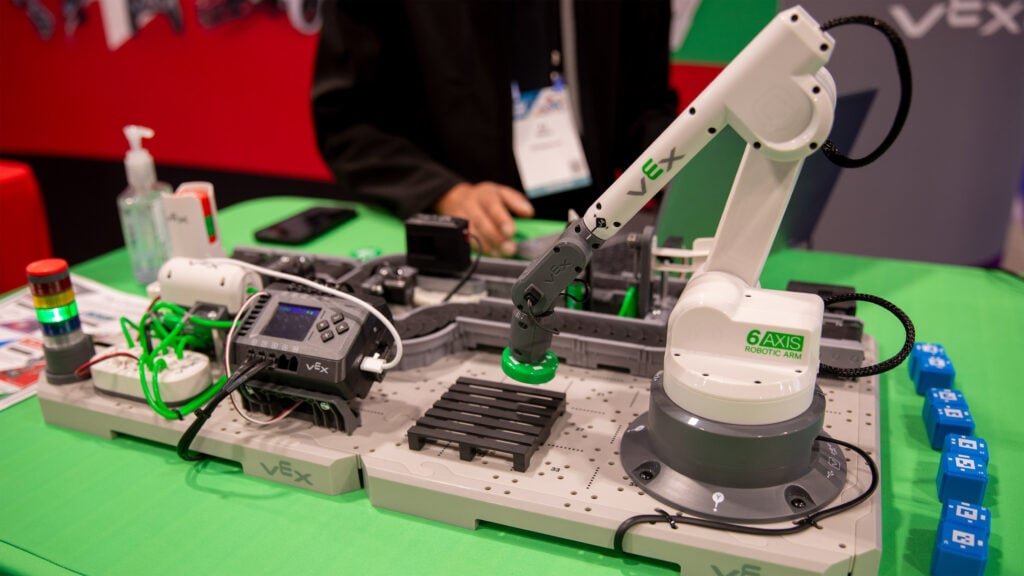
Robotics programs are a cornerstone of 21st-century STEM education. By integrating robotics into learning, district leaders give students hands-on experiences in math, science, technology, and engineering that prepare them for high-demand careers. Along the way, students build technical expertise while strengthening problem-solving, collaboration, resilience, and creativity.
Robotics bridges theory and practice. When students design, build, and program robots, abstract concepts become tangible applications: equations drive movement, coding produces action, and engineering principles turn into working prototypes. This connection deepens comprehension, sparks curiosity, and can shape future academic and career paths.
District leaders recognize robotics’ value, but sustainable funding can be a challenge. Career and Technical Education (CTE) funds and Title IV, Part A grants provide strong opportunities to expand robotics across grade levels, aligning with the goals of workforce readiness, innovative learning, and equitable access for all students.
By strategically leveraging these grants, districts can:
- Expand CTE pathways in engineering, computer science, and advanced manufacturing with robotics as a key component.
- Invest in teacher training to build confidence and capacity for implementing robotics in the classroom.
- Ensure equitable access by purchasing robotics kits and technology for students who might otherwise miss out.
- Support student engagement through afterschool clubs, competitions, and cross-curricular robotics integration.
Here’s how district leaders can tap into these funding streams to launch, sustain, and grow robotics programs that make a lasting impact.
Leveraging CTE (Perkins V) Funding for Workforce Readiness
The Perkins V Act is the primary source of federal funding for CTE programs, designed to equip students with the skills for high-skill, high-wage, and in-demand careers. Robotics programs are an ideal fit because they directly align with workforce needs in industries like manufacturing, engineering, and automation.
Allowed Activities:
- Purchasing Equipment: Acquire robotic kits, 3D printers, and other industry-standard technology.
- Curriculum Development: Create or update courses that integrate robotics and automation into the curriculum.
- Professional Development: Provide training for teachers and educators to effectively implement robotics programs.
- Supporting Student Organizations: Offer financial support for career and technical student organizations (CTSOs).
How to Access: Your robotics program must be aligned with a specific CTE career pathway. This involves demonstrating how the program provides students with skills and knowledge directly applicable to the workforce. Work closely with your state’s Department of Education, as Perkins funding is distributed at the state level.
For more information, visit the U.S. Department of Education’s Perkins V page.
Unlocking Well-Rounded Education with Title IV, Part A
Title IV, Part A (Student Support and Academic Enrichment or SSAE) is a flexible federal grant that supports a well-rounded education, safe and healthy schools, and the effective use of technology. Robotics programs can fit under the “well-rounded education” and “effective use of technology” components.
Allowed Activities:
- Expanding Learning Activities: Use the funds to purchase robotic kits and materials for enriching educational programs.
- STEM Education Kits: The grant explicitly provides funding for kits that support STEM education, which includes robotics.
- Technology Integration: Improve student academic achievement through the use of technology, with robotics being an allowable use.
How to Access: The flexibility of Title IV-A means you’ll need to make a clear case for how your robotics program contributes to a well-rounded education or improves student outcomes through technology. Coordinate with your district’s federal programs or grants office to apply.
For more information, see the Student Support and Academic Enrichment Program (Title IV, Part A) from the U.S. Department of Education.
Beyond Federal Funding: Additional Resources and Strategies
While federal grants are a cornerstone, diversifying your funding strategy is essential.
- Non-Federal Grants: Many private foundations and corporations offer grants specifically for robotics and STEM programs. Organizations like the REC Foundation provide their own grant programs. Corporations like Lockheed Martin, Motorola Solutions Foundation, and Honda also have charitable foundations that support robotics education.
- Grant Writing Support: Many organizations and companies offer resources to help you with the grant application process, including guides, templates, and lists of potential funding sources.
- Partnerships: Form partnerships with local businesses, universities, and military branches (like DoD STEM) to gain additional funding, mentorship, and resources for your program.
By strategically leveraging these funding streams and resources, district leaders can establish and grow successful robotics programs that empower the next generation of innovators.
Additional Resources:
Educational content provided by VEX Robotics, Inc. is made publicly available solely for educational purposes. This content may not be reproduced, modified, or redistributed without proper attribution to VEX Robotics, Inc. Furthermore, the use of any portion of this content for commercial purposes or financial gain is strictly prohibited without the express written consent of VEX Robotics, Inc.
* The information provided herein is accurate to the best of our knowledge at the time of publication. However, we make no representations or warranties, express or implied, regarding the accuracy, completeness, or currency of the information. Furthermore, we do not guarantee that any individual or entity will qualify for any specific funding source. For the most up-to-date and detailed information, please refer directly to the respective funding provider.
Share this on social media:
My Robotics Journey
My Robotics Journey is a short YouTube series from VEX Robotics that spotlights the people behind the robots: teachers, coaches, and more. Each sharing how they got started, the hurdles they hit, and the small wins that kept them going. Every story stands on its own and offers practical takeaways you can use in class or with your team.
If you’re building a program, recruiting students, or just looking for a spark before the season, start here. No jargon. Just real voices and hard‑earned lessons.
Patricia Cortez
Patricia Cortez—Dallas ISD educator and LadyBots coach—shares how she carved out space for girls in STEM. Her team earned Girl Powered and Build awards at the VEX Robotics World Championship, plus Excellence and Teamwork honors at the State Championship.
Zach Short
Zach Short, a STEM educator with TRIO’s Educational Talent Search, talks about his path into robotics and how he’s helping Lincoln, Nebraska high schools build after‑school VEX Robotics programs.
Eric Howe
Eric Howe went from getting started to leading a state championship VEX Robotics team, and shares what kept his students (and him) coming back.
Share this on social media:
Here’s what we covered in the last edition of Drive Forward News: